Past Exhibitions

2010 Exhibition: New Paintings

1 - 26 June 2010
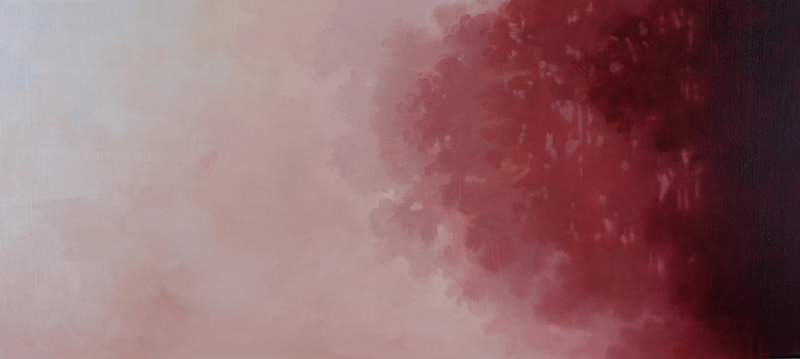
Joanna Logue, Window lII, 2010
Joanna Logue, Joanna Logue 2010
Joanna Logue, studio
Joanna Logue, Studio
Joanna Logue, Conifer - Ballalaba (for Maude) , 2010
Joanna Logue, Essington Paddock Study, 2010
Joanna Logue, Willow -Essington, 2010
Joanna Logue, Conifer-Essington, 2010
Joanna Logue, Field- Black Spring Study, 2010
Joanna Logue, Installation King Street Gallery on William
Joanna Logue, Installation King Street gallery on William
Joanna Logue, Catalogue 2010
Joanna Logue, Road to Brewongie, 2010
Joanna Logue, Essington Field ll, 2010
Joanna Logue, Essington Window ll, 2010
Joanna Logue, Window l, 2010
Joanna Logue, Essington Field lll, 2010
Joanna Logue, Window -IV, 2010
Joanna Logue, Essington Field l, 2010
Joanna Logue, Back Road to Bathurst II, 2010
Joanna Logue, Essington Window V, 2010
Joanna Logue, Forrest Track l, 2010
Joanna Logue, Forest Track ll, 2010
Joanna Logue, Essington Vll, 2010
Joanna Logue, Tree Line Study, 2010
Joanna Logue, Hawthorns- Lake George, 2010

Joanna Logue has lived for over 20 years at Essington Park, a property just outside of Oberon, NSW. Past the 150 year old home, past the one room schoolhouse, you glance over to a solitary grave of a child who died in 1863. Down the hill a little - before you reach the donkeys, the chickens and the paddocks stand the conifer and fir trees that are a testament to the beauty of the western plains. Set amongst this partially artificial landscape, sculpted by the hands of generations of farmers and the sheer will of nature is Joanna’s studio. In this converted horse stable with large blank white walls and natural light the painting begins.

 Joanna is a keenly observant and intellectual painter - stealing the inspiration and beauty offered up to her by the changing seasons; the play of light and shadow upon the landscape; the unpredictable effects of the weather and her photographic memory of minute variations over time. It is not the artist’s intent to copy or replicate what she sees - but rather to use these observations as her ‘muse’; and translate them into a unique language and image that speaks singularly to each other and every viewer. By literally attacking the canvas with layering then scraping back again and again, Joanna reinvigorates her paintings and shows us what we were unable to see ourselves. 

 King Street Gallery on William  2010

2010 Exhibition: Imaging the Gap

4 - 29 May 2010
Adriane Strampp, Falls the shadow, 2009
Adriane Strampp, Hare IV, 2009
Adriane Strampp, Mimesis 2, 2009
Adriane Strampp, Eight Shadows, 2010
Adriane Strampp, Presence , 2010
Adriane Strampp, Presence of Past 2, 2010
Adriane Strampp, Presence of Past 1, 2010
Adriane Strampp, Hare III, 2009
Adriane Strampp, In His Shadow, 2009
Adriane Strampp, Journey, 2010
Adriane Strampp, Reflection, 2010
Adriane Strampp, The Passing, 2009
Adriane Strampp, Hare V, 2010
Adriane Strampp, The Crossing, 2009
Adriane Strampp, In History's Shadow, 2009
Adriane Strampp, Felt , 2010
Adriane Strampp (born USA, education UK) is a Melbourne based artist presently completing a MFA by Research at Monash University. Her current body of work explores earlier concerns, pruned down to core elements both in subject and colour, examining the subtleties and nuances of memory and experience through poetic imagery and personal mythology. It is as much about what is left out as what is said. Current influences range from Gaston Bachelard’s The Poetics of Space to the writings and photography of Patti Smith.

A romantic and figurative painter working through series over long periods, Strampp tends to focus on a central image as a vehicle only for the underlying message. It is not about the subject, but rather that which it conveys. The figure is often felt, but remains in absentia. In early work (mid to late 1980’s) the subject was the horse, sometimes heroic, sometimes damaged, but always passionate. This work was largely influenced by both the new German Neo-Expressionists of the time, and by English artist John Walker, who was highly influential during his residency in Melbourne art schools at that time. From the late 1980’s the horse was slowly replaced by the dress, often set in similar backgrounds and landscapes, and this successful series continued until the late 1990’s. After a studio residency in Italy in 1998, and the final series of Renaissance inspired dress paintings, Strampp began to deconstruct earlier work, often reworking a smaller detail into a larger work in its own right, such as a textile detail from the dress, or a background detail into a major landscape.

Today Strampp’s new work takes another look at the horse and the landscape, in a quieter and more contemplative manner, together with the use of a limited palette. Her work continues to explore the intangible and evocative, that communicates before it is understood, and the importance of and relationship between scale, surface and the poetic image through a method of layering and reduction that reflects the experience of connection, through history on either a personal or broader level. Subject and shadow are indeterminate, and the viewer is drawn into the work to decide between what is ‘real’ and what is not. More importantly, it is hoped that the viewer will experience a connection of experience through the work.

2010 Exhibition: Displaced Futures

6 April - 1 May 2010
Kate Geraghty, Cholera, 2009
Kate Geraghty, Child Soldier, 2009
Kate Geraghty, Isolation, 2009
Kate Geraghty, Displaced Future, 2009
Kate Geraghty, Malnutrition , 2009
Kate Geraghty, Yafanshize II, 2009
Kate Geraghty, Zamunda II, 2009
Kate Geraghty, The Vatican, 2009
Kate Geraghty, Yafanshize I, 2009
Kate Geraghty, Survivors, 2009
Kate Geraghty, Banana Plantation Cemetery, 2009
Kate Geraghty, Augustin Changwi, 2009
Kate Geraghty, Zamunda, 2009
Kate Geraghty, Kibati (man in front of shelters), 2009
Kate Geraghty, Buhimbo IDP (girl walking through camp), 2009
Kate Geraghty, Godlive & Kadogu, 2009
Kate Geraghty, Reunited (two women embracing), 2009
Kate Geraghty, Kibati IDP Camp, 2009
Kate Geraghty, Queuing for Food , 2009
Kate Geraghty, Mother and Child , 2009
Kate Geraghty, Wood Collection, 2009

In Jan/Feb 2009, Kate and journalist Jonathan Pearlman travelled to the Democratic Republic of Congo documenting the wide spread use of rape as a weapon of war and the impact of war on a civilian population who have been living in refugee camps for 15 years. The resulting story became a 2009 Walkeley finalist documentary which can be viewed by clicking here.  

The hauntingly powerful images in Displaced Futures are a narrative for the victims of these crimes. Kate Geraghty’s extraordinary series of photographs raise awareness of the circumstances under which the displaced Congolese people continue to live. 


Kate Geraghty and King Street Gallery on William will contribute a percentage of sales from the exhibition to Médecins Sans Frontières. Their ongoing efforts both in DRC and many other countries around the world provide essential services and support to millions of people who would otherwise be left without life saving medical assistance. 

2010 Exhibition: Correlation

9 March - 3 April 2010
Jan King, Rudaki, 2009
Jan King, Foucault, 2009
Jan King, Toolin, 2009
Jan King, Mevlana, 2009
Jan King, Abyssinia, 2009
Jan King, Studio in Sydney with UWS sculpture prize entry 2010 in progress, 2009
Jan King, Installation: Takara, 2009
Jan King, King Street Gallery on William show 2010
Jan King, Makoo, 2009
Jan King, Sabalan, 2005
Jan King, Khorasan, 2009
Jan King, Nishapur, 2009
Jan King, Zagros, 2009
Jan King, Songshan Landscape, 2009
Jan King, Installation
Jan King, Studio
Jan King, Studio
Jan King, Studio
Jan King, Studio

2010 Exhibition: Shelter

9 February - 6 March 2010
Paul Ferman, Shelter 332, 2008
Paul Ferman, Shelter 333, 2008
Paul Ferman, Shelter 334, 2008
Paul Ferman, Shelter 335, 2008
Paul Ferman, Shelter 338, 2008
Paul Ferman, Shelter 339, 2008
Paul Ferman, Shelter 330, 2008
Paul Ferman, Shelter 336, 2008
Paul Ferman, Shelter 331, 2008

Shelter

While open urban spaces represent democratic, commercial and mainstream social values, disregarded urban spaces represent othernes, displacement and loss of social value.

Invisible spaces are imbued with a sense of having left the safety of social order and are therefore places in which risk becomes a given when encountering that space.

As public urban spaces expand and contract with shifting populations so do the invisible spaces. As a result of this movement these spaces house populations that oscillate between urban normality and moral upheaval. Issues such as race religion illicit social behaviour , sexuality and poverty can all be found floundering in these ‘spaces of no value’, further marginalising them and legitimising their oulaw status.

With passengers seated inside cocooned and protected, the train screams through endless concrete shelters. Dangerous spaces that seem to simmer in an artificial reality.

Paul Ferman


2010 Exhibition: Water

19 January - 6 February 2010
Amanda Penrose Hart, Punishable by Death, 2010

2010 Exhibition: Ceramics

12 January - 6 February 2010
Elisabeth Cummings, Seated Woman, 2009
, Platter, 2009
, Willow Springs Camp, 2009
, On the way to Split Rock, 2009
Robert Rapson, Volendam, 2010
Robert Rapson, Australia (teapot), 2010
Robert Rapson, Four Heads, 2010
Robert Rapson, Valiant (teapot), 2010
Robert Rapson, Balmoral Castle, 2010
Wendy Sharpe, Animals, 2001
Wendy Sharpe, Paris the studio, 2009
Wendy Sharpe, Pontdela Tournelle, 2009
Wendy Sharpe, Blue Vase, 2009
Wendy Sharpe, Blue vase, 2009
Wendy Sharpe, Blue vase 3, 2009
Wendy Sharpe, Pink vase, 2009
, Vase, 2009
Madeleine Hayes, Madeleine and the dog
Madeleine Hayes, The interior is precious, 2009
Elisabeth Cummings, Studio shot , 2009
Wendy Sharpe, Standing Nude, 2001
Robert Rapson, Untitled ship, 2009
Wendy Sharpe, Man and Woman, 2001
, Landscape, 2009
, Set of plates, 2009
, Bowls, 2008
, Landscape ll, 2009
Madeleine Hayes, Assorted Box, 2009
Madeleine Hayes, Big Bird, Little Bird, 2009
Madeleine Hayes, Big tea bag little cup, 2009
Madeleine Hayes, Doughnuts, 2009
Madeleine Hayes, Heaven, 2009
Madeleine Hayes, Evolution, 2009
Madeleine Hayes, Ezra and Grapes, 2009
Wendy Sharpe, vase ll, 2009

2009 Exhibition: The Drawn Line

17 November - 20 December 2009
Wendy Sharpe, Pont des Arts at Night (self portrait in Paris), 2009
Rachel Ellis, Living Room Winter Light, 2009
Rachel Ellis, Bathurst Side Fence, 2009
, Self Portrait, 2009
, View From Joan's Office, London, 1999
, Studio Self Portrait, 2009
, Stella, 2009
Jenny Sages, A New Present, 2009
Jenny Sages, A Collective Memory, 2009
Jenny Sages, Irretrievable, 2009
Jenny Sages, Ecclesiates or the preacher, 2009
Jenny Sages, Walking the Land, 2009
Rachel Ellis, Morning, Side Fence Bathurst, 2009
Elisabeth Cummings, Wedderburn Chair, 2009
, Stella, 2009
Wendy Sharpe, Roof in Florence (self portrait with Bernard Ollis), 2009
, Stella II, 2009

Tom Carment (Courtesy Damien Minton Gallery)

Elisabeth Cummings

Rachel Ellis

Jenny Sages

Wendy Sharpe

Kevin Lincoln (Courtesy Niagara Gallery)

"A drawing always goes into another drawing and another until it needs to go somewhere else but I don’t know how… then it becomes an experience in itself."


Jenny Sages 2009

2009 Exhibition: Macroscope

20 October - 14 November 2009
Shona Wilson, Diatom #8, 2009
Shona Wilson, Diatom #10, 2009
Shona Wilson, Diatom #20, 2009

Full colour catalogue available $10

Most life on earth is invisible to the naked eye.

‘Macroscope’ brings focus to the microscopic organisms known as Diatoms. Diatoms are a sub group of planktons - the most abundant life form and food source in our oceans. Magnified, these wondrous structures reveal universal patterns and forms which are seen in cross cultural indigenous imagery and new scientific theory. In this sense these organisms are metaphors for the building blocks of life itself - appearing like the skeletal remains or fossils of some imagined past or future.

‘Diatom’ comes from the Greek for wanderer or drifter, unable to swim against the ambient flow but using wind upon the water surface to keep themselves suspended, they are totally subject to their external environment. Each work embodies a piece of found beach plastic magnifying a disturbing discovery. Recent research shows that plastic has infiltrated planktons. This is a marker for our far reaching interruption into the natural order.

‘Macroscope’ exposes and questions how we affect and morph the natural world at its ‘unseen’ levels.


Shona Wilson


April 2009

2009 Exhibition: Paintings

22 September - 17 October 2009
Richard Wastell, Looking Across the River Through She-Oaks, 2009
Richard Wastell, Cold Camp, 2009
Richard Wastell, Hightide, 2009
Richard Wastell, Campfire by the Sea, 2009
Richard Wastell, Campfire, Mussels, 2009

Full colour catalogue available $5

Catalogue Essay, 2009

People come to Tasmania seeking solace in its pristine wilderness. In shady valleys just off the highways or on walking tracks across mountains reserved especially for the purpose, they think they find it. Yet their joy in ‘untouched nature’ depends upon their ability to bracket it off from all those parts of the world that are not untouched, to pretend for a moment that this is all there is. Similarly, the understanding of the scientist depends on bracketing nature as a rational system, and the wealth of the industrialist on bracketing it as an impersonal store of raw materials for the taking. In order to see the world in one way, we must discount other ways.

What Richard Wastell wants to do is not necessarily to remove te brackets, nor even to recommend one approach over another, but to encourage us to step outside the brackets for a time so as to understand their meaning, and therefore our place in the broader scheme of things. Only by transcending our habitual ways of thinking can we break out of our isolation.

As a consequence, these paintings might be confusing (even confronting) to those expecting an easy environmental polemic. Burnt-out tree trunks (which may or may not be casualties of Tasmania’s rapacious woodchippers) appear as eerily beautiful as piles of mussel shells by a river (which, he has cautioned, are not necessarily Aboriginal middens). Withering she-oaks stand side-by-side with trhiving ones; abalone shells are artificially arranged into rhythmic conga-lines on a stylised seashore; spring butterflies assume a menacing monumentality; campfires burning in the distance migth signal innocent family picnics or the start of a conflagration. Death and life, destruction and creation, succeeding one another in a never-ending cycle.

While such equivalences might thwart those who demand a firm moral stance, the artist does not assume to tell us how to think, but to suggest the right questions to ask ourselves.

So these paintings are not just landscapes. They are about culture, imagination and memory, seamlessly blending the private and autobiographical into the public and social. While not promising salvation, they hold out hope for survival. Although no people intrude, the human footprint is everywhere suggested, marking the land with relics and traces, for, as the philospoher Erazim Kohák writes, ‘what is at issue is… whether we shall conceive of ourselves as integrally continuous with the world about us or as contingently thrown into it as strangers into an alien medium.’*

Step up close, and the whole picture dissolves into a myriad of tiny elements, like teaming molecules, jostling and crowding, forming themselves into shell, treetrunk, water or bare earth, then just as quickly dispersing again. Richard’s surfaces are constantly alive. Step back, and everything coheres into a solid, monumental classicism, stylised and slightly unreal, as in a children’s storybook.

It is this lively interplay between the agitated and the static, between the miniature and the monolithic, that suggests wholeness, continuity and regeneration, putting these beautiful, meditative pictures into a state of nature.


Peter Timms, June 2009.


* Erazim Kohák, The Embers and the Stars: a philosophical enquiry into the moral sense of nature, University of Chicago Press, 1987

2009 Exhibition: Current Exhibition 'Dialogue' - New Paintings & Print Collaborations

25 August - 19 September 2009
Salvatore Gerardi, Alluvial Imprint 5, 2009
Salvatore Gerardi, From the series of nature: Drift (diptych), 2009

This exhibition includes five visiting printmakers that have joined with Salvatore Gerardi to make this new body of work called Dialogue

Print Collaborators:

  • Paul Smith master printer eStudio Editions
  • Brenda Tye
  • Michelle Watts
  • Sussie Heymans
  • Peter Sharp courtesy Liverpool Street Gallery Sydney


2009 Exhibition: I-Thou

28 July - 22 August 2009
Idris Murphy, Dancing Trees, 2009
Idris Murphy, Threes Shadows, 2009

When looking back and considering the ‘influences’ on my work, several artists and writers come to mind; these may be more or less influential at any given time. There are though, certain connections that hold and seem to be continuing. Martin Buber has been one of these connections; often encountered in quotes by other writers. Buber’s articulation of how we respond to the world has been seminal to my way of seeing and therefore how I ‘see’ my paintings. The Martin Buber connection (exemplified by McMahon’s Painting __I-Thou__) added to my interest in the work of Colin McMahon; in particular the way in which he depicted land. In quoting here at length from Bubers book __I-Thou__, it is hoped it will elucidate not only his approach, but also how this may be useful when considering encounters of the land and of paintings. As the difference between the truth of a painting and the truth about a painting are significant. Buber’s writings have for me been a way of continuing my assessment of western paradigms in painting and have added to my encounter with indigenous art.

Idris Murphy 2009

Full colour catalogue $10 available please visit the gallery.

2009 Exhibition: Melbourne

14 - 26 July 2009
Joanna Logue, Field -Black Springs, 2008
Joanna Logue,  Willow -Nana Glen, 2009

The paintings in this exhibition were inspired by the landscape surrounding my studio in Oberon.

Whilst making the work, I was interested in the tension created by the juxtaposition of shapes against the wider field and the placement on these forms within the picture plain. By doing away with extraneous detail, my hope is that a kind of distillation might take place, where the essence of this landscape hums softly through.

Joanna Logue 2009

Exhibition dates: July 14 -26 2009
Opening: Thursday 16th July

Atrium
Federation Square
Crn Flinders & Swanson Streets
Melbourne 300

2009 Exhibition: Inside

30 June - 25 July 2009
John Bokor, Afternoon Interior, 2008
John Bokor, Pencils and Comic Book, 2009

Inside 2009, the first body of paintings conceived since his move from inner-western Sydney to the old coal mining township of Bulli, John Bokor has created paintings more densely worked in subject matter and in palette, moodier.

It is a curious shift given the nineteenth century township of tree lined timber cottages is by comparison spacious in scale yet Bokor surveys with a visual interrogation that works t intensify every nuance of his new environment stretching from the Illawara Escarpment to the Pacific Ocean.

Fleeting impressions of familiar still life objects - bottles, chairs and books, jostle for space with organic matter from the outside world - birds, cliffs and water. In past paintings trees punctuated a cityscape, they now dominate a landscape. Signature compression of Bokor’s mark making,that once reflected urban static, is now at work vigorously conveying the landscape of his studio and its windows where light feeds in and colour triumphs over subject matter.

But while the geographical shift is catalyst for even more charged emotional currents pulsing on moody surfaces, it also affords Bokor a chance for his frenetic Expressionist brush strokes to play rough with variations in perspective. Two and three dimensional picture planes topple into the viewer’s space while wonky cropping and angles of perspective hint at an impressionist interpretation of a world that has its source in the nineteenth century. It is perhaps the most fitting acknowledgement to this precocious painter’s Bulli environs.

Courtney Kidd, 2009

2009 Exhibition: Overflow

2 - 27 June 2009
Martin King, The Way The Land Lies II, 2009
Martin King, Messenger, 2009
Martin King, Burnt Creek Offering (sequence) , 2009
Martin King, Burnt Creek Offering II, 2008

The images for this show were begun last year before the recent fires in victoria.

However one of the underlying meanings i wanted to embed in the work is the tragic irony of the Australian landscape is the paradox of fire and water.

The silhouettes of the denuded trees in my works is an image of a tree that has been drowned by flooding, an abundance of water.

Prophetically they look like burnt trees and the title of some of the works ‘Burnt Creek Offering’ actually alludes to the irony and the inevitable in this harsh landscape, that watercourses which at times can become inundated with water can at other times provide the elements and conditions for infernos.

The nature of bushfire in Australia is equally as paradoxical, where wild fire ravages the landscape merciless on plant and animal life, whilst at the same time generating the necessary conditions for re-growth and germination.

I was aware of the implications and impressions that the blackened silhouetted trees and birds might suggest in the light of subsequent bushfire events in February.

The decision to continue with the imagery for this show given the tragedy of the fires, was made because I had embarked upon this series and the underpinning ideas were about the harsh paradoxes in the Australian Landscape, but to portray these paradoxes with a sense of mystery and hopefully beauty.

I have titled some of the work ‘the way the land lies’ and another ‘prophet and loss’ which alludes to the mystery and unpredictability of nature.

2009 Exhibition: New Paintings

5 - 30 May 2009
Peter O'Doherty, 101, 2008

King Street Gallery (on William) is proud to present an exhibition of New Paintings by Peter O’Doherty. This exhibition is O’Doherty’s first major solo exhibition with the gallery and will showcase his vibrant, individualistic paintings produced over the past 18 months.

The exhibition will showcase the quirky, familiar and nostalgic images from O’Dohertys childhood for which he is best known. Images from a time, in the ’50s and ’60s, when fibro homes, patios, wrought iron and the beach were the stuff of dreams and the dream of owning your own home was a reality. Through his earliest experiences growing up in New Zealand and on the northern beaches of Sydney, he has captured the essence of that time and thrown forward to today images of fibro beach houses and blocks of flats locked in time, providing us with a very personal, retro reality.

Few of us have grown up oblivious to these images and places. After more than 20 solo exhibitions and numerous awards and group shows, O’Doherty gives us a very refined vision - something from the past to enjoy into the future.

2008 Exhibition

18 November - 20 December 2008

2008 Exhibition: Gradient

21 October - 15 November 2008
Kensuke Todo, Apex, 2008
Kensuke Todo, Loft, 2008
Kensuke Todo, Indefinite, 2008

Artist statement

Space is an essential element of everything I make. I came to Australia wanting to understnad weestern conceptions of space and how they were different from the Japanese approach. What I found in trying to incorporate these ideas into my work was that the gap was bigger than I had expected, and more difficult to define.

Japanese architects Arata Isozaki and Atsushi Ueda argue that the Japanese idea of space differs from the western perception because in Japan space is connected to the soul. Originally the idea of respect for the heavens did not exist. Japanese indigenous people thought that gods lived not in heaven, but beyond the ocean. In keeping with this, the Japanese sacred axis is drawn horizontally rather than vertically, and it is the earth and ocean that are revered.

With the opening up of Japan in the late 19th century, a wesern concept of space was introduced and a new word, kukan, began to be used to describe it. Today kukan is the most commonly used word for space but I wonder how confronting the change was, and how it influenced current Japanese understanding of the concept.

The contradiction between Japanese and western spatial concepts has become an important feature in the way I think about my work. Contemplating vertical and horizontal axes gave me the idea of using fixtures such as stairs and escalators, which suggest vertical movement, and modifying or presenting them in unusual ways. Distorting the space surrounding the objects allows me to incorporate horizontal movement in an ostensibly vertical form. Although no longer functional, I like to think the stairs or escalators retain a sense of human movement - I imagine people experiencing the particular freedoms, constraints and interpretations of gravity connected with each work.


Kensuke Todo 2008

2008 Exhibition

23 September - 18 October 2008
Andrew Christofides, Aphrodite, 2007
Andrew Christofides, Village Craft, 2006
Andrew Christofides, Pantheon: After Kurt I, 2007

ANDREW CHRISTOFIDES: NEW WORK, 2008

Andrew Christofides’s studio based research continues Modernism’s search for purity of process and form whilst being relevant and responsive to the concerns of ‘place’ and the artist’s role in the new millennium.

The work is informed by a deep regard for the substance and monumentality of Renaissance Painting and a continuing belief in the ideals of early 20th Century European Abstraction. The work has sought to incorporate aspects of each. Personal experience and cultural background inform the work through the use of titles, colour relationships and metaphoric nuance. The contrast and apparent contradiction of rigid geometric structure and the subtely expressive surface qualities, in the work, highlights the tension evoked between the predetermined and the intuitive. This tension creates what Christofides believes is a necessary duality – the balance between the concrete and the esoteric, the struggle between the rational and the romantic.
Christofides sees this duality as a metaphor for the way life forces one to take the limitations of the everyday, the mundane, and create something heroic – something that, in the end, transcends the everyday by becoming unique and beautiful.

Whilst these paintings may appear to have no overt visual relationship with the real world they are in fact absolutely linked to it through the very process of intuition, emotional response and, both past and present, experiences and through the way Christofides chooses to rationalize and quantify these experiences. While the works are in no way descriptions of specific memories and experience they nevertheless have roots in those events and carry subtle and indelible traces of them.
In the end these paintings are seen as primarily self-contained aesthetic entities and are meant to be experienced by the viewer for their visual values.

Andrew Christofides, 2008


2008 Exhibition: White Work

26 August - 20 September 2008
Jayne Dyer, Butterflies, 2008

JAYNE DYER

White Work

King Street Gallery on William


Press Release

What happens when the visual arts and mathematics conflate?
In White Work Jayne Dyer explores the scope and relationship of visual arts with systems usually associated with measurement.
In this ambitious exhibition, large wave-like arcs writhe through the gallery. Misshapen orbs, pyramids and cubes sit precariously on two metre high table like constructions, seeming to suspend in space and defy natural order and logic. Delicate ink and pencil drawings map chaos.
Paper, objects and architecture become one, meanings simultaneously appear, dissolve and reappear as systems of geometry concerned with questions on the relative positions of figures and properties of space are built and dismantled.
The exhibition operates an open-ended equation. Works are presented in a state of flux, pointing towards an understanding of a narrative, but speak as much about disconnection and secrecy as about transparency.

Biography
Australian artist Jayne Dyer is currently living in Beijing developing projects for Asia, Europe and Australia. Her practice is multi-disciplined with an installation focus, featuring photographs, wall works and sculptural objects that combine the ready-made and the hand-made.
Extensive national and international exhibitions and awards include regular participation in curated exhibitions and projects in Asia and Australia; Australia Council for the Arts established artist new work grant (2008), residencies in Taiwan (Asialink, 2008), Hong Kong (Lingnan University, 2007), Paris, Cite (NAS/FONAS, 2005; AGNSW, 1999), Beijing (Asialink, 1996), and Italy (Monash University, 1991/2). Dyer was the commissioned artist for the 2006 and 2007 Sydney Writers Festival. Her work is regularly reviewed in art journals and books and is in public and private collections in Australia, China, Japan and England. In 2005 she received a Commonwealth of Australia PSM for contributions to the arts & education. Qualifications include an MA (research) & BFA Hons, RMIT University, Melbourne. Dyer is represented by King Street Gallery on William, Sydney and Uber Gallery, Melbourne.


Jayne Dyer
Exhibition Dates
26th August –20th September 2008

2008 Exhibition: Diary of my Days

29 July - 23 August 2008
Jenny Sages, Eddy's Creek, 2007
Jenny Sages, Colour, 2008
Jenny Sages, The Red One, 2008

Jenny Sages

JULY 29 – AUGUST 23, 2008


For the past 24 years Jenny Sages has organized and taken regular trips to remote areas of the Northern Territory

Jenny travels with a small entourage – usually other artists and usually only women. Accompanied by the same two guides for over 18 years, and usually a guide from the Aboriginal community whose land she is on- the trip is rarely predetermined. It is travel in a rugged 4-wheel drive, swags, a small-netted tent and a GPS. There are no hotels, no hot showers, and no gourmet restaurants. There is the overwhelming ruggedness and beauty of the Australian bush; the awe of the spectacularly untouched gorges and the sense of solidarity and respect for the land.

It is this raw, unspoiled landscape that informs Jenny’s paintings of encaustic & pigment on board. Jenny digs, scratches, scraps and scarifies her encaustic surfaces applying layers of pigment along the way- while continually reworking the surface. The resulting works are multi layered abstract images that give us a very individual interpretation of the Australian landscape and expose the viewer to an exceptional artist’s vision.

2008 Exhibition: Free

3 - 29 June 2008
James Jones, Kiss me, 2008
James Jones, Blew, 2008

James Jones graduated from The National Art School in 1991 and has since held 9 solo exhibitions and participated in over 30 group exhibitions. This is James 5th solo show with King Street Gallery on William and his first at the gallery’s new premises.
James’ studio ‘The Palace’ is an enormous vintage building in the heart of Sydney, where his painting and reading consume and sustain him. His studio practice reflects an expressionistic approach to the figure – a longstanding trademark of James’ work. A thick application of paint, characteristically disguises a drawing of an otherwise recognisable object.
‘Free’ embraces the boxing world as a metaphor for the emotional and physical repercussions of ‘the knocks of life.’ Everyday we deal with life’s upheavals – the good, the bad and what ever may fall in between. This body of work encompasses a palette rich in colour replacing the predominantly white veil seen in previous shows.
James’ paintings hang in the collections of Macquarie Bank; Allen, Arthur, Robinson; News Corporation; Windsor & Newton and the Establishment Hotel.


2008 Exhibition: Paintings from Paris

6 - 31 May 2008
Wendy Sharpe, The Waiter in the Doorway, 2007
Wendy Sharpe, Corner Restaurant, 2007

Catalogue Essay

by Courtney Kidd

Ah… Paris

Paris, France… “A tamed and familiar land, as comfortable as an old espadrille” or perhaps not, as Graham Robb suggests in his recently released history, Discovering France. At the heart of the locale exists a fundamental paradox where the place’s perceived appearance - formed by generations of tourists savouring cafes, charcuteries and connoisseurship - belies its rawness and grunt, the latter being the France of discovery by earlier explorers and travelers.

At what pont though does one shift from the stages of explorer, traveler and tourist to beyond, to become woven into a place’s fabric? It is a question underpinning Wendy Sharpe’s enquiry in her current body of paintings, Paris.

A regular traveler to hte city of lights, she recently spent three months over the European Autumn/Winter as a recipient of the AGNSW Denise Hickey Studio. Exactly 20 years earliers, Sharpe as a precocious emerging painter, had been awarded the same studio. This time, as a mid career artist, she notes,

“I was much more able to shift easily from the enclosure of the Cite, its comfortability and security to beyond, to where I could absorb the ambience, capture the moment, the strange juxtapositions of tourists in places, the gestures of Paris’s people, the ways all different types were all squashed in.”

That said, the luxury of space and time, afforded in the provision of a studio, kick started arguably Sharpe’s finest painting to date.

It takes seconds to fall in love with her cluster of tiny canvases living and breathing every nuance of the city via relaxed, sensuous mark making. Surface scuffs and frissons of paint pulse with tthe city’s field of expressions while more extravagant conversations evolve with the four meter canvases. They stretch to an evocative survey of Parisian life where mood is delivered by swatches of moving colour. Distorting the real in a way not dissimilar to real estate ads, these panoramas survey then close in with a fish eye lens retaining their integrity as Sharpes’s signature expressive style whisks them into shape.

It is as if the whole of Paris, Sharpe’s Paris, were caught in a moment of suspended animation, as if she the onlooked were committed to being more than a tourist, more than a someone passing through who does this looking, this painting for pleasure. The viewer too shares this process. He or she becomes a person looking at an artist looking at someone. Sharpe, as the one looking and creating, captures then an aesthetic distance and herein lies the key to her work. It is grounded in a fundamental paradox, as if to mirror the paradox of Paris itself, the sacred end of culture and the profane end of an old espadrille.

Wendy Shapre, whether painting about artist’s studios, art schools, militia on missions, lovers in studios, cafes or tourists, is curious about the romance of art, the romanitc perceptions about its practice, its making, but never does she doubt it is work, seriously hard work. This is what affords this independent traveler an integrity over time and a well deserved success in the annals of Australian art.

*Graham Rob, The Discovery of France, Norton & Co, 2007

Courtney Kidd is a Sydney based art consultant and writer

2008 Exhibition: Surface

8 April - 3 May 2008